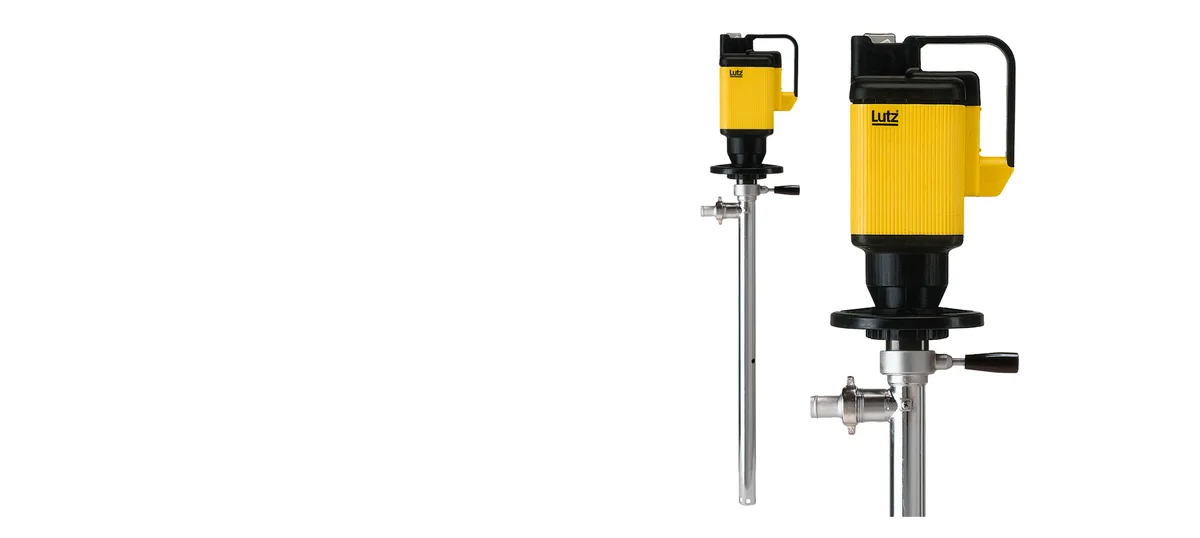
Why Drum Pump Selection Matters
Most drum pump problems trace back to one decision made in the wrong order: someone picked the motor first. Wattage does not dissolve in acid, and it does not push resin through forty feet of hose. The liquid picks the pump. The system picks the hydraulics. The motor comes last.
Choose wrong and you get a melted tube in a solvent, a seal destroyed by a crystallizing chemical, or a pump that delivers a third of its advertised flow because nobody counted the nozzle and meter. Choose right and one modular Lutz motor can serve several tubes across your plant for years.
This guide walks the same selection path we use when a customer sends us an application: define the liquid, pick the pump principle and tube material, settle the seal and hydraulics, then match the motor and the discharge system as one assembly.
Start With the Liquid
Exact chemical, concentration, temperature, viscosity, density, and whether the area is classified. This decides the tube material and pump principle.
Build the Pump Tube
Material, sealless or mechanical seal, R rotor or L impeller, and the immersion length measured from your actual container.
Match Motor and Discharge
Corded, battery, air, or explosion-protected drive, plus the hose, nozzle, and meter that the flow actually has to push through.
How a Lutz Drum Pump System Fits Together
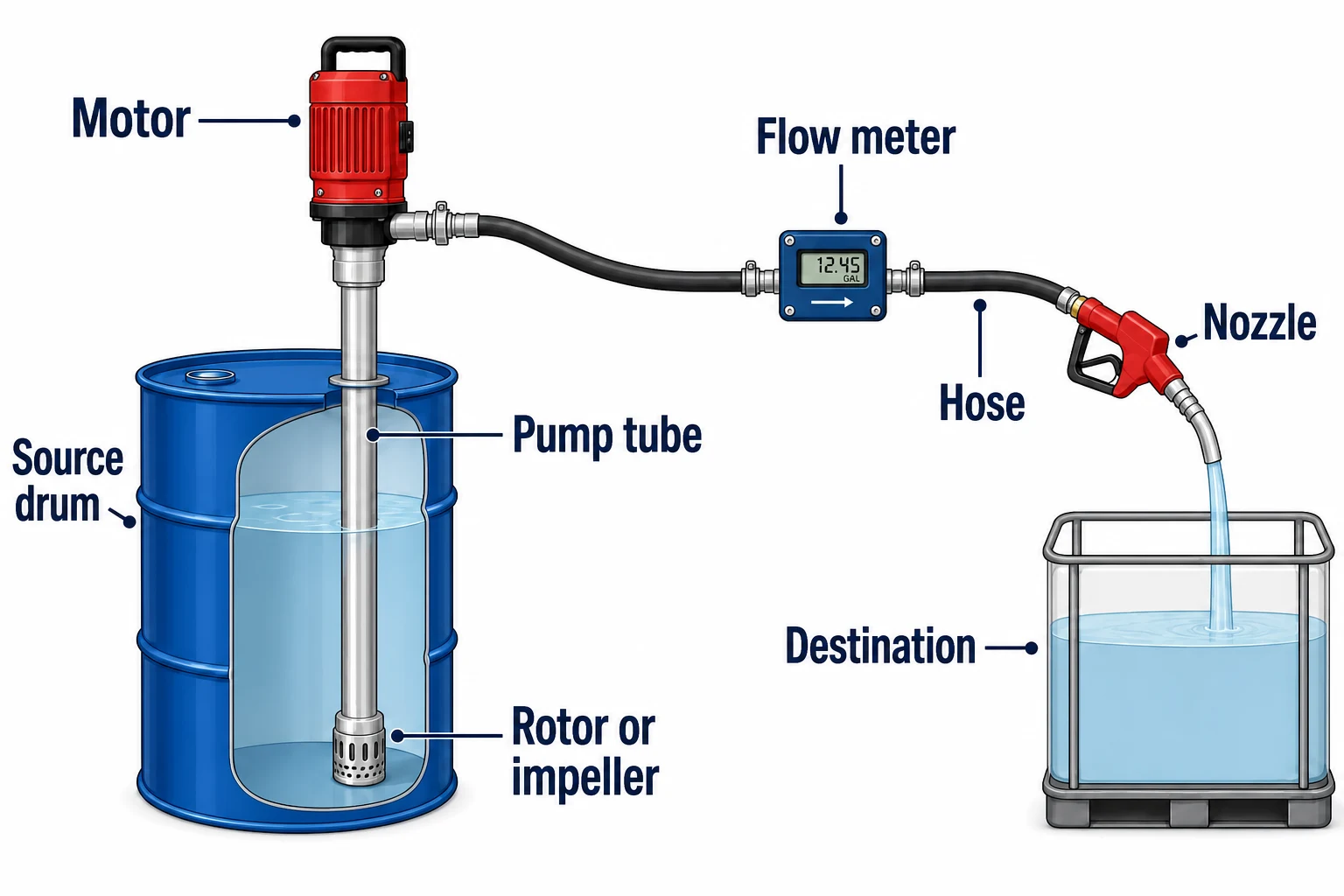
A Lutz drum pump is two main pieces: a motor and a pump tube. The motor locks onto the top of the tube, the tube reaches down into the drum or tote, and a rotor or impeller at the bottom pushes liquid up and out through the pressure connection. Around that core you add the container connection, hose, fittings, nozzle, and often a flow meter.
That last group matters more than most people expect. Published flow is measured at the pump outlet with nothing attached. Everything you bolt on after the outlet subtracts from it.
Modular does not mean universally interchangeable
Many Lutz motors and tubes mix and match within compatible families, and that flexibility is a real strength of the line. But progressive cavity pumps, horizontal IBC pumps, battery systems, and hazardous-service assemblies have specific drive and approval requirements. Confirm the exact motor and tube combination by part number. Never assume any Lutz motor fits any Lutz tube.
Our catalog is organized the same way the selection works:
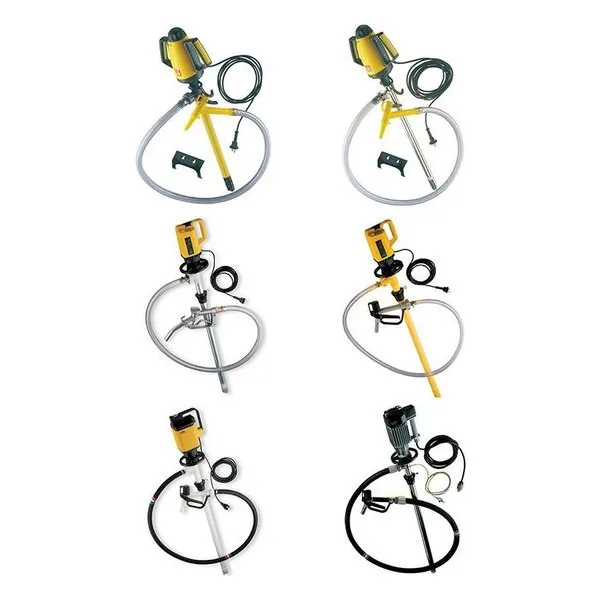
Complete Pump Sets
The cleanest route when a listed package matches your liquid, container, voltage, and discharge path. A set simplifies ordering, but it is not a blanket compatibility approval. Confirm every component against your exact service.
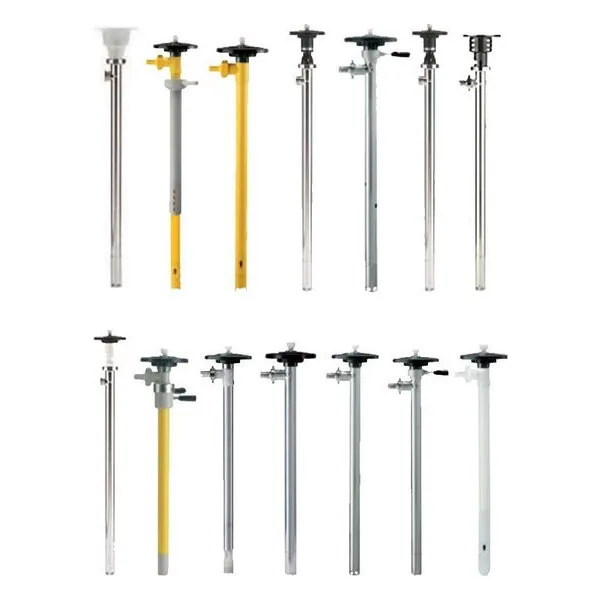
Pump Tubes by Material
Screen by material first, then verify the shaft, hydraulic element, seals, temperature limit, and immersion length against the actual liquid.
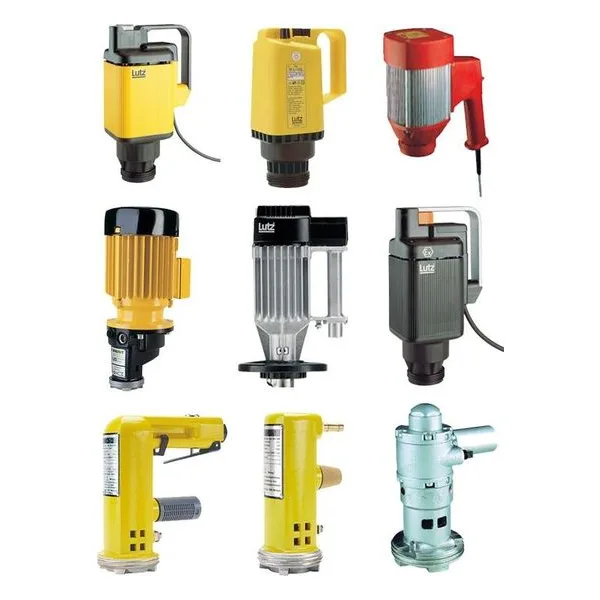
Motors and Drives
Corded electric, battery, compressed air, explosion-protected, and geared three-phase drives. Select the motor after the tube, duty, power supply, and area classification are known.
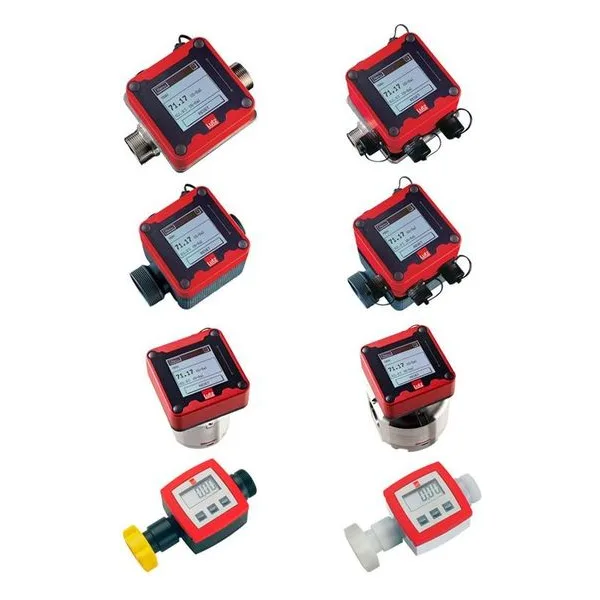
Flow Meters
Turbine, nutating disc, and oval gear designs. Choose by liquid, viscosity, the flow you will actually run, accuracy, and pressure loss, not by pipe size.
Step 1: Define the Liquid and the Job
Lutz's own application questionnaire asks for the liquid, flow, head, temperature, specific gravity, viscosity, container, materials, immersion depth, and power supply before anything else. That is a good picture of how the selection actually works. Write these down before you open a product page:
Why every line matters: temperature changes chemical resistance, viscosity decides the pump principle, density decides the torque, the container decides the tube length, and the work area decides the motor approval. Skip one input and the selection can fail in a way that no upgrade fixes later.
Step 2: Pick the Pump Principle and Tube Material
Centrifugal Tube or Progressive Cavity Pump?
The first branch is not electric versus battery. It is centrifugal versus positive displacement. A standard centrifugal drum tube covers water-like to moderately viscous transfer. When viscosity, pressure, solids, or product sensitivity push past what a high-speed centrifugal tube can do, the answer is a Lutz B70V or HD-E progressive cavity pump, not a bigger motor.
Standard centrifugal pump tube
When: Water-like to moderately viscous liquid, portable transfer
Note: Available in multiple materials, lengths, seal designs, and R or L hydraulics
B2 Vario or B1/B2 battery pump
When: Small or intermittent quantities from pails and drums
Note: Compact, variable speed; compact does not mean chemically universal
B70V or HD-E progressive cavity
When: Medium to very high viscosity, pressure delivery, gentle transfer
Note: Certain B70V configurations are listed to 100,000 mPa s
MP mixing and pumping tube
When: Product settles or separates and must be mixed first
Note: Switches between mixing and pumping within its application limits
Complete-drainage tube
When: Minimize residual product left in the drum
Note: Designed to leave roughly 0.1 liter in the container
B200 horizontal container pump
When: Repeated unloading from an IBC bottom outlet
Note: Connects at the outlet valve instead of entering from the top
Tube Materials: What Each One Is For
The tube is only the first material decision. The full wetted path includes the shaft, rotor or impeller, bearings, seals, hose, fittings, nozzle, and meter. A compatible outer tube does not excuse an incompatible seal.
Aqueous and corrosive liquids at moderate temperatures. The everyday workhorse for acids, alkalis, and cleaning chemistry.
Watch for: Representative PP tubes list a 50 C (122 F) liquid temperature limit. Not for flammable liquids.
Demanding corrosive service, including concentrated acids and alkalis, at higher temperatures than PP.
Watch for: Representative PVDF tubes list limits to 100 C (212 F). PVDF is not automatically better for every chemical.
Mineral oils, diesel, and other compatible neutral, petroleum-based liquids.
Watch for: Not for unknown corrosives, and not automatically right for every fuel blend.
Solvents, flammable liquids, and food or cosmetic products with the right configuration.
Watch for: Stainless alone does not make an assembly approved for a classified area or hygienic by default.
Highly corrosive, low-viscosity chemicals where even stainless gives up, including some flammable service.
Watch for: The most capable alloy is not the goal. The least complex compatible system is.
A chemical resistance chart is a screening tool, not an approval
Lutz's own resistance guide notes that its ratings were assessed at room temperature and that resistance changes with concentration, temperature, impurities, and water entry. A table entry for "sulfuric acid" tells you nothing about your 93 percent solution at 110 F. When you cannot verify a material, send us the Safety Data Sheet and the real operating conditions before ordering.
Step 3: Sealless or Mechanical Seal
Lutz builds pump tubes in two constructions, and the naming takes a minute to learn: MSL, SL, or DL on a part number means sealless, while MMS, MS, or GLRD means mechanical seal. Verify the exact nomenclature on the product page, because it varies by market and product generation.
Sealless Tube
Start here for clean, low-viscosity liquids that do not deposit or crystallize. No shaft seal means one less wear part and simpler maintenance.
The liquid still touches bearings and internal parts, so every internal material must remain compatible. Fewer seal parts is not the reason to pick it. The liquid is.
Mechanical-Seal Tube
The right screen for liquids that crystallize, harden, stick, or are perishable, and for services that need controlled separation and cleaning.
Seal faces and elastomers join the compatibility decision. One mechanical seal does not fit all chemicals.
Sealless does not mean run-dry forever
Lutz describes sealless tubes as conditionally dry-run safe: brief dry running does not usually cause immediate damage. That is tolerance for an emptying drum, not permission for continuous dry operation. Mechanical-seal tubes are far less forgiving, since dry running wears the seal quickly. If an empty container could leave the pump spinning, set an operator procedure or level shutoff.
Servicing an existing tube? We stock seals and O-rings, repair kits, and impellers and drive parts for the current Lutz families.
Step 4: R Rotor or L Impeller
This is the most Lutz-specific decision in the whole process, and the letters trip people up constantly. R is the axial rotor, built for higher free-discharge flow into an open, low-resistance path. L is the radial impeller, built for head: elevation, long hoses, dense or viscous liquids, meters, and nozzles. R does not stand for radial.
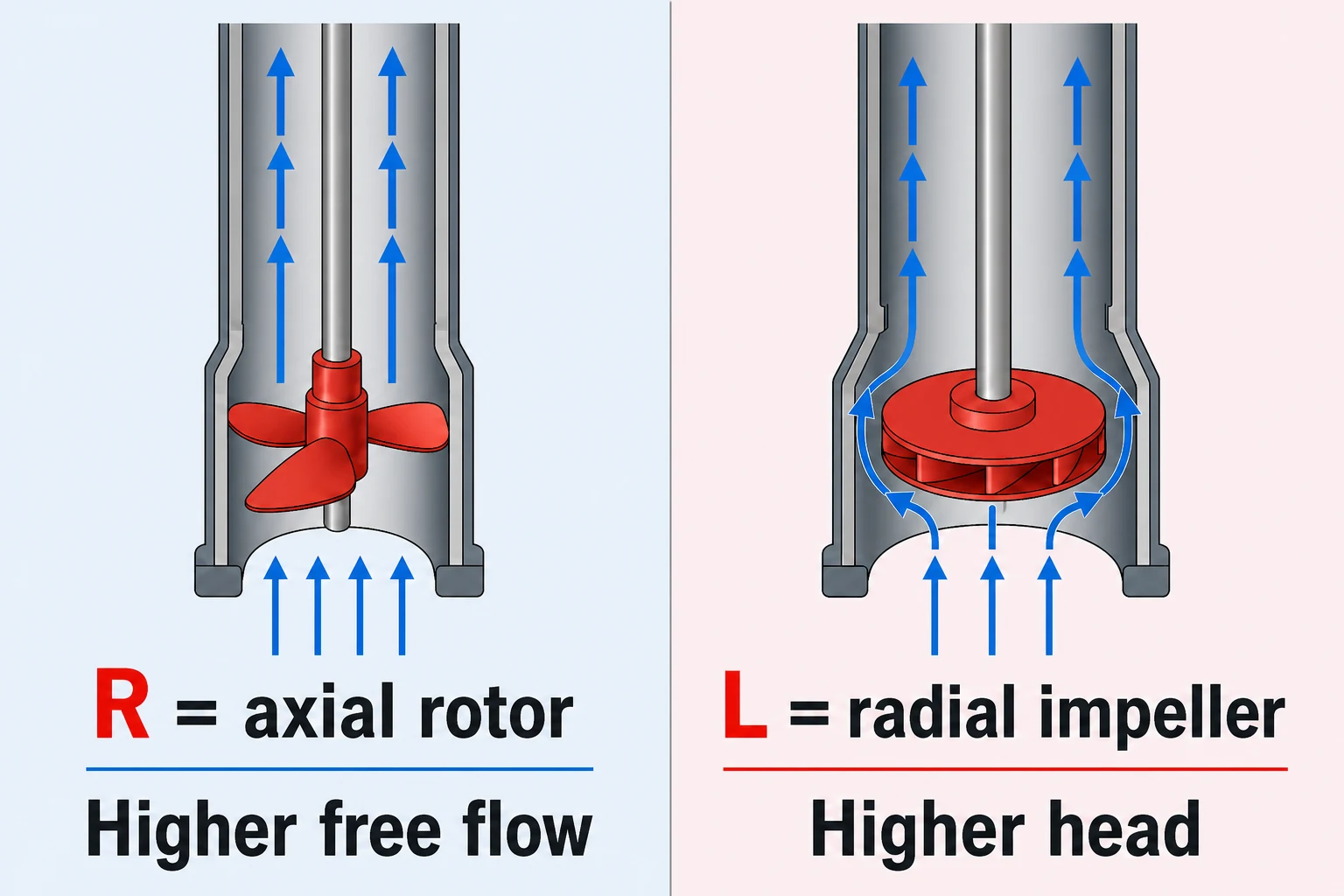
Two current 41 mm polypropylene tubes show the tradeoff clearly:
PP 41-R (axial rotor)
Flow: 170 l/min (about 45 GPM)
Head: 12 m (about 39 ft)
Viscosity: 350 mPa s
Density: 1.4 kg/dm3
PP 41-L (radial impeller)
Flow: 95 l/min (about 25 GPM)
Head: 25 m (about 82 ft)
Viscosity: 800 mPa s
Density: 1.9 kg/dm3
Representative published maximums for specific current part numbers, measured at the pump outlet. Other materials and lengths differ.
Never combine every maximum on a data sheet
Maximum flow, head, viscosity, and density are boundary values. No pump hits all of them at once. Final sizing needs your actual operating point checked against the performance curve for the exact tube and motor combination.
Step 5: Match the Motor or Drive
Now, and only now, the motor. It has to supply enough torque for the tube, liquid density, and viscosity, fit your power supply and duty cycle, and carry the right approval for the work area. Lutz covers the range with corded electric, battery, compressed air, explosion-protected, and three-phase geared drives.
B2 Vario
Fit: Small quantities at the bench, lab, or maintenance cart
Note: Variable speed with compact 32 mm tubes in PP, PVDF, or stainless
B1 / B2 / B3 Battery
Fit: Cordless portable transfer, small to larger quantities
Note: B1 handles to 200 mPa s, B2 to 400, B3 to 700 with a standard tube. The 5,000 mPa s B3 figure applies only when paired with a B70V-SR progressive cavity pump
B36 / MI 4
Fit: General 120 V portable service for nonflammable liquids
Note: Current pages carry both names. Confirm the nameplate when replacing an older motor
B55 / MA II
Fit: Higher-power portable service, IP54 variants available
Note: Do not substitute by family name alone. Match power, speed, voltage, and enclosure
ME Explosion-Protected
Fit: Flammable liquids and classified areas
Note: The approval on the exact part number must match your site classification and jurisdiction
MD Compressed Air
Fit: Plants with good air supply, some high-viscosity and flammable services
Note: The MD2xL is an oil-free 1,000 W air motor. Air drives the motor, never the drum
B4 / GT Geared Three-Phase
Fit: Continuous, stationary, engineered installations
Note: Needs proper electrical service, mounting, and controls
Browse electric drum pump motors and explosion-proof motors, or see all motors and drives.
Battery does not mean intrinsically safe
A cordless motor still carries electrical energy. OSHA has stated that battery-operated equipment used in a hazardous location must be specifically approved for that location. Pick a battery pump for mobility, never as a shortcut around classified-area requirements.
Step 6: Tube Length, Hose, Nozzle, and Meter
Measure the Immersion Depth. Do Not Guess It.
Tube length comes from a measurement, not from the words "55-gallon drum." Measure from the support plane, which is the container opening, adapter, or bracket the pump rests on, down to where you want the intake to sit. Current 41 mm tubes are commonly offered in 27, 39, and 47 inch immersion lengths, with special lengths available across the range.
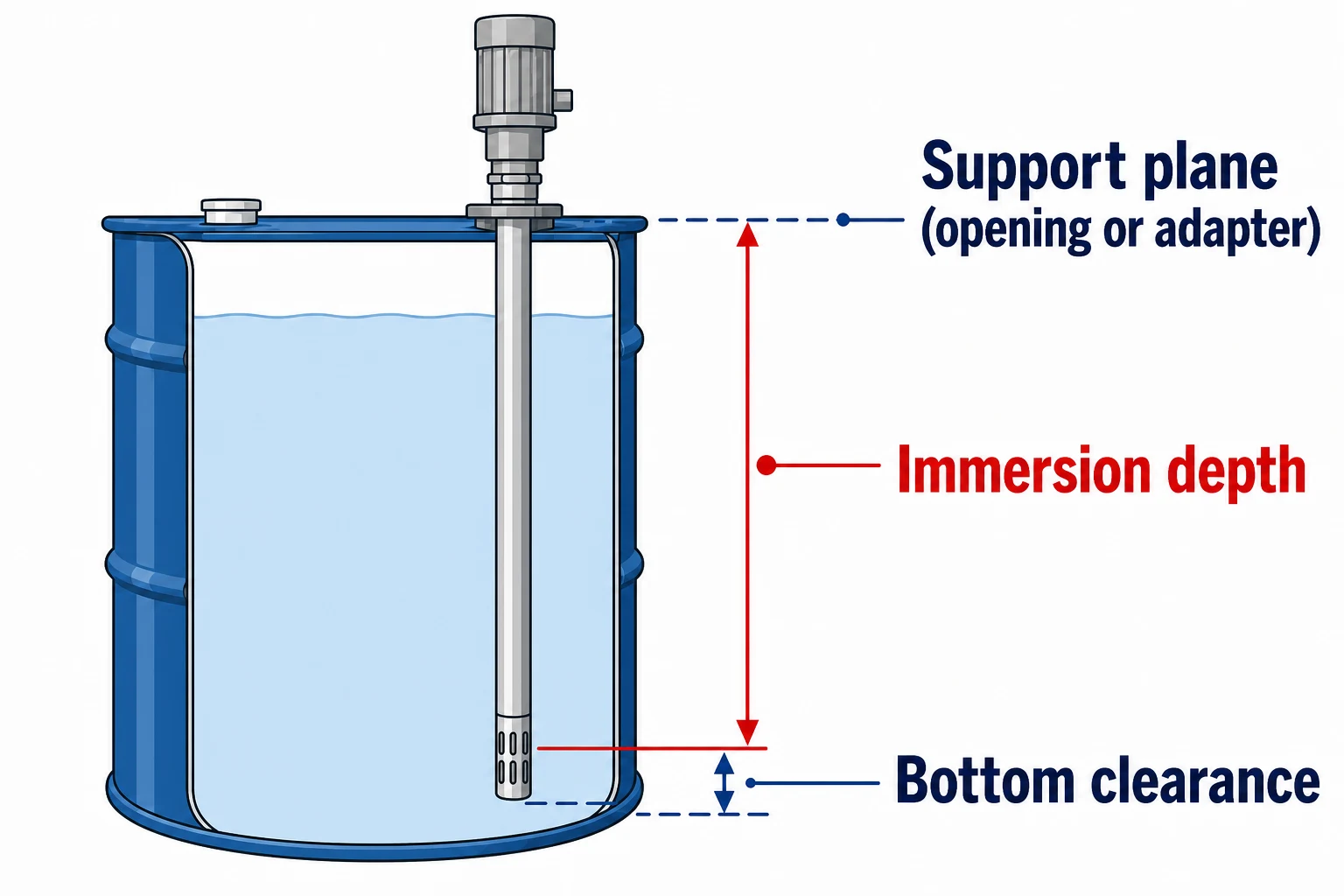
Check that the tube diameter passes the opening, that the motor clears surrounding structures, and pick up the right bung adapter or bracket for the container. For repeated IBC unloading, compare a top-entry tube against a B200 horizontal pump on the bottom outlet: less handling, less mess, and a fixed connection.
The Discharge System Is Part of the Pump
Published flow is measured at the pump outlet with water and nothing attached. Your process starts after that point. Hose length and diameter, elevation, fittings, valves, the meter, and the nozzle all consume head before liquid reaches the destination.
Catalog flow is not delivered flow
Lutz's own battery brochure shows a PP pump set rated 65 to 80 l/min at the outlet dropping to roughly 22 l/min with its listed nozzle attached. Same pump, same set. The accessories did that. When you size, report the complete discharge path: a five-foot open hose and a forty-foot hose with a meter and spring-loaded nozzle are two different pump applications.
- Verify chemical and temperature compatibility of the hose tube, cover, and end fittings, not just the pump.
- Use the largest practical hose inside diameter and report total length, not straight-line distance.
- A hand nozzle improves control but can cut flow substantially. Check whether your pump may run against a closed nozzle; positive-displacement pumps generally need a bypass valve for that.
- Choose the flow meter by liquid, viscosity, and the flow you will actually run. Turbine meters suit thin liquids, nutating disc and oval gear designs carry more viscosity.
Everything downstream lives in hose, connectors, and nozzles and flow meters.
Flammable Liquids and Classified Locations
Chemical resistance and explosion protection answer different questions. A stainless tube can resist a solvent perfectly while the assembly remains unapproved for the room it is standing in. For flammable service, the motor, tube, hose, fittings, nozzle, meter, bonding, and grounding must all match the site's hazardous-area determination, and OSHA requires equipment in classified locations to be approved for that specific location.
Start from the Safety Data Sheet, flash point, and the area classification made by a qualified person, not from the pump catalog.
Select an approved motor and tube combination. Metal tubes (stainless or Hastelloy) with explosion-protected drives are the starting screen.
Verify every downstream component: conductive hose, fittings, nozzle, and meter suitable for the liquid and the service.
Bond and ground the transfer path where required. The Lutz chemical guide illustrates the full electrically connected arrangement.
ATEX or IECEx markings on a global product page do not by themselves establish acceptance for a US Class/Division location. Verify the North American certification on the exact part number.
Never pressurize the drum to force product out
Where OSHA's flammable liquids standard applies, transfer by applying air pressure to the container is not an approved method. Compressed air may drive a pneumatic motor. It must never be the transfer force inside the product container.
Common Selection Mistakes
These are the ones we untangle most often on the phone:
Starting with the motor
The liquid and pump principle come first. A motor cannot fix a tube that is melting, and more wattage does not move 30,000 mPa s resin through a centrifugal tube. That job belongs to a progressive cavity pump.
Assuming R means radial
In Lutz naming, R is the axial rotor for flow and L is the radial impeller for head. Order them backwards and the pump will either starve your system of pressure or waste capacity you paid for.
Quoting catalog flow as delivered flow
Published maximums are measured at the bare pump outlet. Add the hose, meter, and nozzle before you promise a fill time. Lutz's own brochure example drops from 80 to about 22 l/min once the nozzle goes on.
Choosing material by chemical name alone
Concentration, temperature, and contaminants change resistance, and the chart entries were rated at room temperature. The seal, hose, and meter have to survive the same liquid as the tube.
Picking tube length off the container label
Measure from the actual support plane to the pickup point. Drum adapters, cover plates, and internal slopes all move the number, and a tube jammed against the drum floor is a wear problem from day one.
Treating battery or air power as hazardous-area approval
Removing the cord does not remove the ignition risk. The exact equipment must be approved for the classified location, whatever powers it.
Replacing a motor by family name alone
Current pages pair names like B36 with MI 4 and B55 with MA II. Confirm the full nameplate, voltage, speed, and enclosure before swapping, and send us photos if the plate is worn.
Frequently Asked Questions
Can one Lutz motor run more than one pump tube?
Often yes, within compatible modular families, and that is one of the best reasons to standardize on Lutz. It is not a universal rule though. Progressive cavity pumps, B200 horizontal pumps, battery systems, and hazardous-service assemblies have specific pairing requirements. Verify the exact motor and tube part numbers before reusing a drive.
What is the difference between a Lutz R and L pump tube?
R is the axial rotor: more flow into an open, low-resistance discharge. L is the radial impeller: more head for elevation, long hoses, dense or viscous liquids, meters, and nozzles. On comparable 41 mm PP tubes, the R lists 170 l/min at 12 m of head while the L lists 95 l/min at 25 m.
What length pump tube fits a 55-gallon drum?
Usually one of the standard 39 or 47 inch immersion lengths, but measure your actual container from the support plane to the pickup point rather than trusting the nominal volume. Adapter height and internal geometry shift the answer, and special lengths are available when standard ones do not fit.
Can a sealless Lutz tube run dry?
Briefly, yes. Lutz describes sealless tubes as conditionally dry-run safe, meaning a short dry-running event does not usually cause immediate damage. Repeated or extended dry running still wears internal parts, and mechanical-seal tubes should not run dry at all.
How much flow will I actually get?
Less than the published maximum, sometimes much less. Catalog figures are measured with water at the bare pump outlet. Your liquid, hose, elevation, fittings, nozzle, and meter all reduce it. Give us the full discharge path and we will size from the curve instead of the headline number.
Can I use a polypropylene tube for a flammable liquid?
No. Flammable service calls for a conductive metal tube, an approved explosion-protected drive, conductive hose and fittings, and proper bonding and grounding, all matched to the site's classification. Chemical compatibility alone never qualifies an assembly for flammable liquids.
When do I need a progressive cavity pump instead of a standard drum pump?
When viscosity climbs past what the selected centrifugal tube is rated for, when you need pressure delivery, gentle low-pulsation transfer, or the product carries compatible solids. Lutz B70V configurations are listed to 100,000 mPa s. Do not try to brute-force viscosity with a bigger motor on a centrifugal tube.
Should I buy a complete set or build from components?
A complete pump set is the fast path when the listed package matches your liquid, container, voltage, duty, and discharge path. Build from components when you need a special material, length, hydraulic design, seal, meter, or hazardous approval. Either way, verify every component against the exact service before ordering.
When to Call an Expert
This guide covers the method, but some applications deserve a real conversation. Get in touch if:
You cannot verify chemical compatibility for every wetted component at your actual concentration and temperature.
The liquid is flammable or the transfer area is classified. We will help you match the approval, not just the material.
Viscosity is high enough that you are debating centrifugal versus progressive cavity.
You are replacing an existing pump and the nameplate is worn, or the model uses legacy naming.
The discharge run involves long hoses, elevation, meters, or batch control and you want the delivered flow confirmed before you order.
One complete application packet gets you an exact configuration on the first pass: the Safety Data Sheet, concentration, temperature, viscosity, container details, hose path, required flow, power supply, and area classification. For an existing pump, add photos of the motor nameplate, tube label, lower end, and discharge connection. Our contact form accepts document and image attachments, so everything stays with the request.
Talk to a Lutz Drum Pump Expert
We carry the full Lutz drum pump line, from complete sets to individual tubes, motors, meters, and repair parts, with real technical support on every application.